


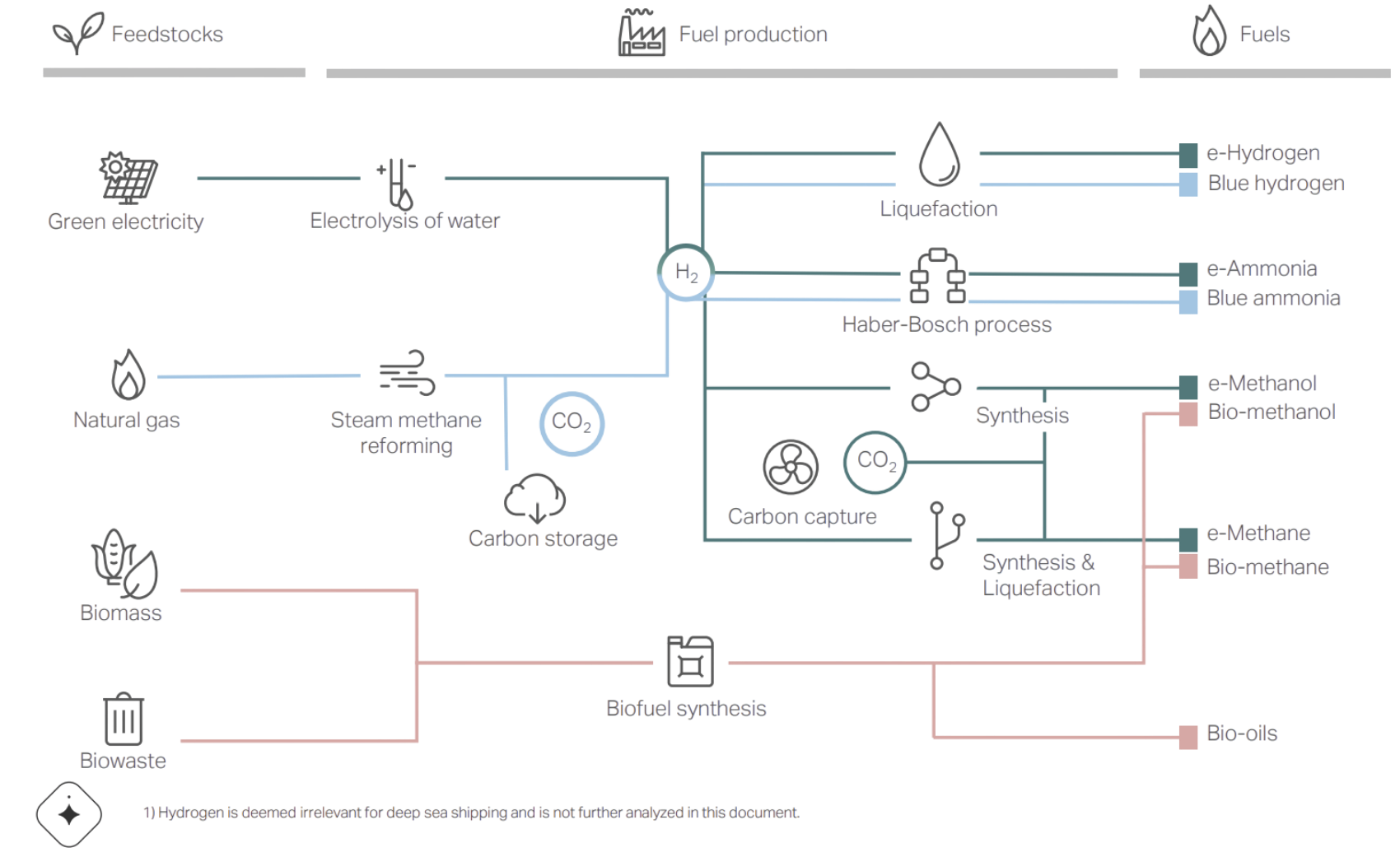
Ammonia (NH₃) is a promising marine fuel that can, when produced using low‑ or zero‑carbon energy sources, be zero emission. Ammonia is produced by combining Nitrogen (found naturally in the air) with hydrogen. Based on the source of hydrogen, it can come in:
- Green (produced from renewable electricity)
- Blue (fossil fuels with carbon capture)
- Grey (conventional fossil fuels without capture)
As a fuel, ammonia enables zero CO₂ emissions on a tank‑to‑wake basis and is therefore seen as a potential solution for deep‑sea shipping segments where energy density and long‑range capability are critical. The well-to-tank total emissions will depend on the production.
Current concepts rely on dual‑fuel or ammonia‑capable engines, with a limited amount of pilot fuel required for ignition, and with additional onboard systems for fuel handling, ventilation, and emissions control.
Main risks
Ammonia is highly toxic to humans, and the primary risk in a maritime context is exposure rather than fire, explosion or corrosiveness which is other risks to be aware of.
Even relatively low concentrations can have serious health effects, depending on the duration of exposure. From the pilot project Skuld participated through Green Shipping Program two exposure guidances have been cited.
Importance of both preventing leaks and ensuring rapid detection and response will be vital considering this as fuel. As a result, system design should prioritise containment, detection systems, and ventilation, while operational procedures must ensure safe handling during bunkering, maintenance, and normal operations.
Skuld experience
As part of the Grieg Star pilot under the Green Shipping Programme (2022), Skuld conducted a review of its P&I claims history relating to LPG carriers transporting ammonia as cargo. The analysis revealed a very low incidence of ammonia-related claims across 15 years of exposure (2007–2022). Where incidents did occur, they were predominantly associated with specific operational interfaces such as cargo arm connections, purging, pressure testing, and maintenance activities rather than systemic failures or loss-of-containment scenarios.
This claims experience indicates that ammonia-related risks are manageable through sound system design, operational discipline, and crew competence. At the same time, it underscores the critical role of human factors and the importance of robust risk mitigation.