


Batteries in maritime applications are devices that store electricity and provide power to ships for propulsion, systems, and backup when needed. Batteries can have different operation modes:
Full electric
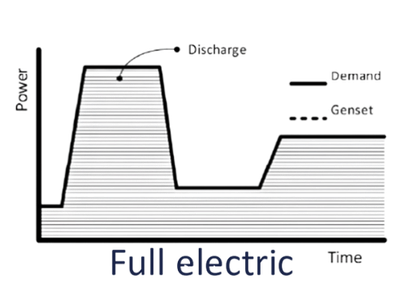
The vessel operates entirely on battery power for a period of time, with no use of the gensets during operation.
Spinning reserve
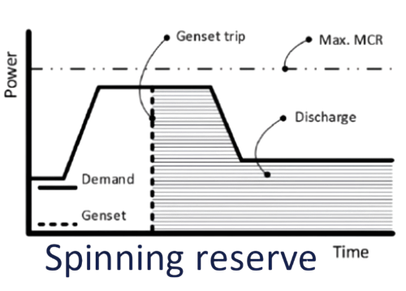
The battery provides backup power instantly if a genset fails, ensuring continuous operation without interruption.
Peak shaving
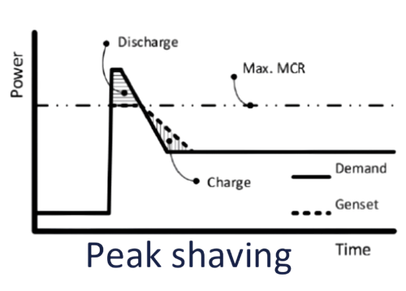
The battery supplies additional power during short high‑demand periods, allowing the gensets to run at a lower and more stable load.
Load levelling
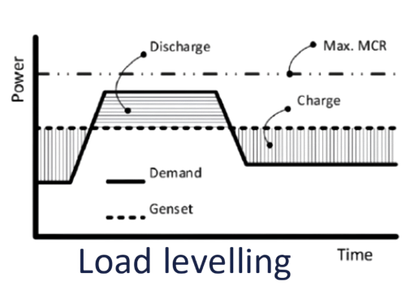
The battery absorbs excess energy or supplies additional power to keep the engines operating at a steady and efficient load.
Boost function
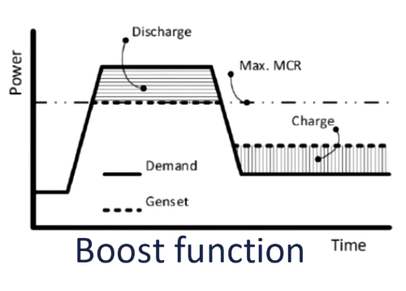
The battery delivers extra power when needed, enabling smaller engines to meet occasional high power demands.
Ramp support
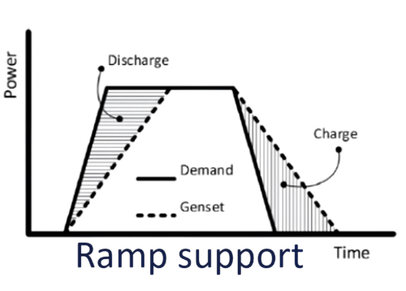
The battery smooths rapid changes in power demand, reducing stress and response time for the engines.
Load smoothing
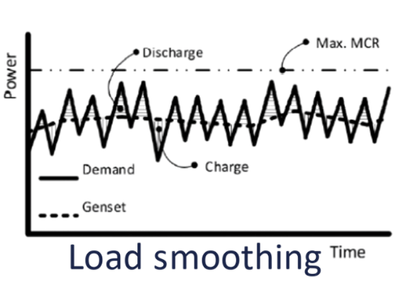
The battery continuously balances small fluctuations in demand, stabilising the power output and improving overall system performance.
Main risks
Ageing and degradation: Battery performance degrades over both calendar time and charge/discharge cycling. As internal resistance rises, heat generation during peak loads increases while usable capacity declines. On vessels with older packs or demanding duty cycles, this can erode safety margins, for example, during dynamic positioning (DP) or manoeuvring increase the likelihood of failure, and ultimately give rise to H&M claims for premature replacement, Battery Management System (BMS) faults, or DC-grid disturbances.
Water exposure sensitivity: Maritime batteries are highly vulnerable to moisture and saltwater ingress, both at module level and within cabling and interconnects. Beyond corrosion and insulation breakdown, water ingress can precipitate internal short circuits and thermal events. Class guidance mitigates this risk by requiring watertight boundaries or high ingress-protection ratings (e.g., IPX7), depending on the installation arrangement.
Integration and severity drivers: Where batteries are installed, claim severity and yard time can increase as a result of Original Equipment Manufacturer (OEM) dependency (for modules and BMS), hazardous-gas management, forensic testing requirements, and the need for class re-approval following repairs or modifications.
Skuld experience
Skuld is a member of the Maritime Battery Forum. Through our participation, we gain access to a substantial network and a depth of expertise in the use of batteries across maritime applications.
Further information about the Maritime Battery Forum is available here:
https://www.maritimebatteryforum.com/
Our member spotlight article can be read here:
https://www.maritimebatteryforum.com/news/member-spotlight-skuld