


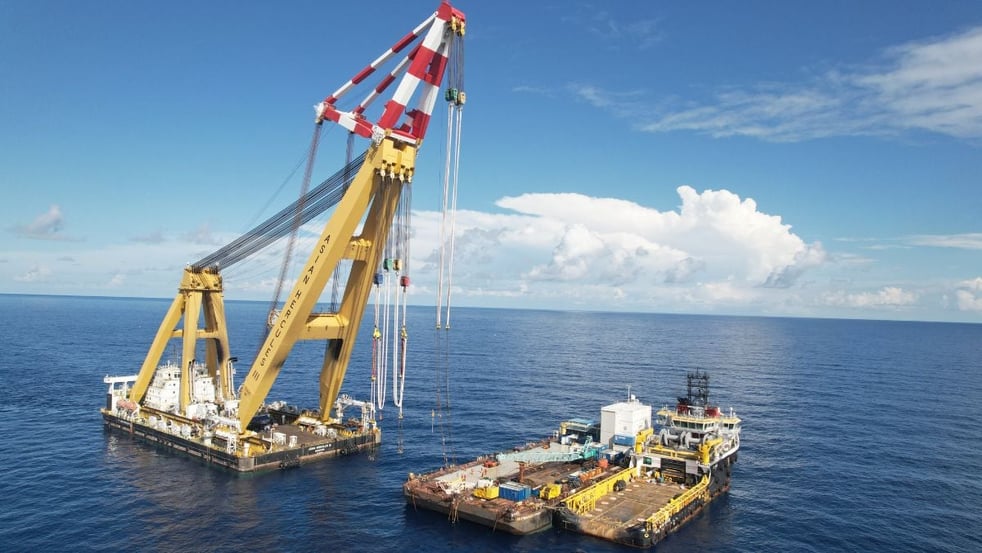
Operations in the offshore energy sector are steadily becoming more complex. From Floating Offshore Production and Offloading units (FPSO) and drilling units operating in deep waters to vessels installing and maintaining offshore wind farms closer to shore. Offshore operations include complex and high value assets where a single incident can trigger significant property damage, third-party liabilities such as pollution and wreck removal, and governmental scrutiny in parallel.
In such environments, the claims handler becomes a key player in managing and mitigating the consequences of the incident, making sure that the assured’s interests, their crew and affected third parties are protected. This article outlines Skuld Energy’s approach to claims handling in the energy sector, detailing how we work and the extensive experience our team has in handling major energy cases.
The value of an integrated approach
Claims handling in the energy sector is rarely a one-dimensional process. A fire on a floating unit, for example, can involve physical damage to the asset (H&M), pollution liabilities (P&I), complex salvage operations, and possible contractual exposures.
Skuld Energy offers both P&I and H&M insurance to operators and contractors in the energy sector and supports a wide range of energy operations globally. Having the insight and overview of the various insured interests, enables Skuld to faster decision-making and reduces silos between the Skuld claims handler and the assured. Furthermore, it enables efficient and clear communication with all stakeholders, including owners, operators, underwriters, brokers, and regulators.
Decades of experience in complex casualties
Skuld has been writing offshore energy risks for more than 50 years, during that period, Skuld has supported its members through some of the world’s most significant maritime and offshore incidents. Skuld Energy has a dedicated casualty coordinator who is responsible for coordinating Skuld’s response to all casualties involving our energy members. The casualty coordinator is supported by our dedicated Technical Manager and the wider claims team. In addition, the Skuld Energy casualty team is supported by a centralized Casualty & Major Claims team that works across all Skuld business units. Our Casualty & Major Claims team has managed hundreds of high-profile events, including major salvages, wreck removals, pollution cases, collisions, fires, and structural failures.
What sets Skuld apart is not only technical competence, but the ability to coordinate multi-layered responses across multiple jurisdictions. Our specialists, with backgrounds in law, marine engineering, offshore operations, and energy risk management, provide members with the confidence that every aspect of an incident is thoroughly covered. These resources and experience enable Skuld to handle, together with our external service providers, complex casualties worldwide.
Skulds experience spans a variety of vessels and offshore operations. Below, we provide a case example of how Skuld would handle a significant casualty.
Case example: MODU fire and partial loss
To illustrate how Skuld’s experience and working methods add value to our members, consider a realistic example based on Skuld’s experience with offshore energy casualties.
A Mobile Offshore Drilling Unit (MODU) operating in the Gulf of Mexico suffers a major fire in its engine room during drilling operations. The fire is extinguished, but it causes:
- Severe hull and machinery damage.
- Pollution from leaking hydraulic fluids.
- Evacuation of crew and suspension of drilling activities.
- Potential contractual liabilities toward the charterer for downtime.
- Risk of wreck removal if structural stability deteriorates.
With separate insurers, this type of event can lead to fragmented handling, with differing priorities among hull underwriters, liability insurers, and contractors. However, with Skuld as claims leader across both P&I and H&M/PD, the response is unified from day one.
Step 1 – Immediate activation:
Within hours, Skuld’s Casualty & Major Claims team mobilises local correspondents, surveyors, and salvage experts. The casualty leader establishes direct communication with the members’ operations team and local authorities.
Step 2 – Integrated coordination:
While the H&M/PD specialists assess the structural damage and repair options, the P&I team coordinates pollution response, crew repatriation, and regulatory reporting. Contractual exposures toward the charterer are reviewed simultaneously, ensuring liability and damage assessments align.
Step 3 – Strategic salvage and recovery:
Salvage plans are approved swiftly, balancing the need to stabilise the unit with cost efficiency and environmental safety. Because both hull and liability interests are aligned under Skuld’s leadership, decision-making is clear and consistent.
Step 4 – Transparent communication:
Throughout, Skuld maintains open communication with the assured, co-insurers, brokers, and relevant authorities – ensuring trust and avoiding conflict between stakeholders.
Step 5 – Resolution and learnings:
The damaged unit is towed to port, repairs are completed, and pollution liabilities are settled. Lessons learned are shared with the members’ operations team to improve emergency preparedness for future offshore projects.
The result:
Minimal delay, consistent strategy, and a fully coordinated response - all made possible by an integrated claims leadership model.
Salvage, wreck removal, and environmental response
Few areas demonstrate the importance of having a strong claims team more clearly than salvage and wreck removal. In the energy space, these operations are often technically demanding, legally complex, and environmentally sensitive.
As a P&I club with deep operational experience, Skuld possesses the specialist knowledge and global network to manage these incidents from initial notification to completion. Whether coordinating deepwater wreck removals, working with coastal authorities on pollution response, or supporting large-scale offshore recoveries, Skuld’s claims leadership ensures that safety, compliance, and cost-efficiency are maintained throughout.
Supporting energy clients beyond the claim
Skuld Energy’s approach is to assist our members before, during, and after energy operations. We therefore support members with contract reviews from highly experienced energy lawyers, loss prevention activities and pre-operational risk workshops covering a wide range of technical disciplines, as well as after-incident analyses following major casualties to learn and enhance preparedness. This continuous learning cycle ensure that our members benefit from the collective insight of Skuld’s global claims experience.
Sustainability and responsible claims handling
As part of Skuld’s ESG commitment, we see casualty management as an opportunity to drive positive environmental and operational outcomes. Our approach to salvage, wreck removal, and pollution response prioritises safety, sustainability, and long-term impact – always guided by Skuld’s core values of reliability, competence, integrity, and transparency.
The Skuld way
At Skuld, we unite deep energy-sector knowledge with unmatched claims experience. We deliver clarity, confidence, and control when the stakes are highest – the Skuld Way.