


An examination of legal and operational risks for shipping in the Strait of Hormuz
Introduction: The geopolitical background
Despite ongoing diplomatic efforts, tensions between the United States and Iran continue to escalate, primarily due to Iran’s nuclear programme. The US has responded to these developments by significantly increasing its military presence in the Middle East, reinforcing regional forces, deploying major naval assets, including the USS Abraham Lincoln carrier strike group, and ramping up aircraft patrols, surveillance, and readiness exercises.
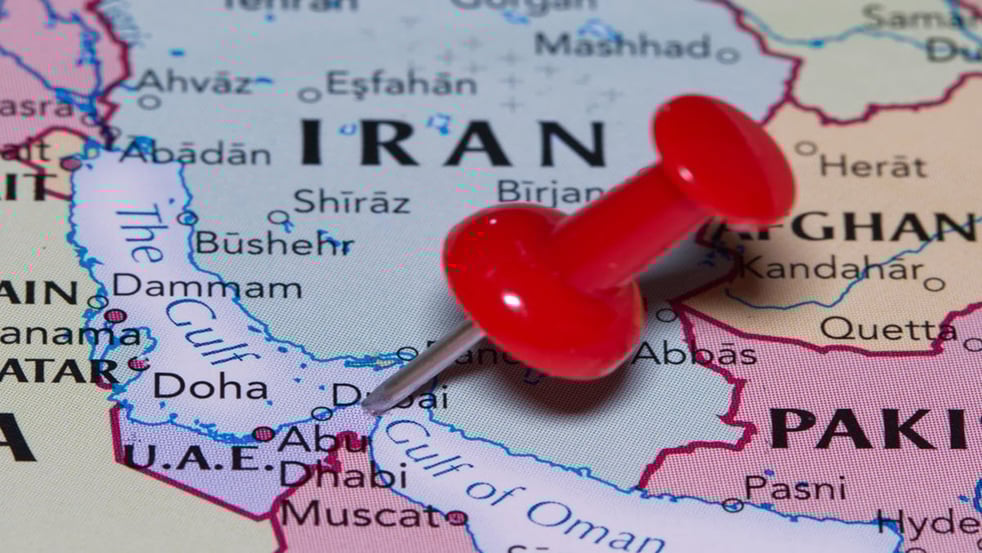
On 17 February, Iranian state media reported a partial closure of the Strait of Hormuz; however, no complete closure has occurred to date. Iran has seized commercial vessels and oil tankers in the region, often citing alleged smuggling offences. On 9 February, the US Department of Transportation’s Maritime Administration (MARAD) issued an advisory urging US-flagged commercial vessels to avoid Iranian territorial waters when transiting the Strait and to refuse permission for Iranian forces to board if requested. Vessels are also advised to keep AIS transponders operational unless otherwise directed by the US Navy. Reports have emerged of Iranian authorities attempting to force commercial vessels into their territorial waters, coinciding with a US Navy fighter jet’s interception of an Iranian drone near the USS Abraham Lincoln.
Since mid-2025, there has been a notable increase in incidents of GPS and AIS jamming and spoofing around the Hormuz Strait, often attributed to Iranian electronic interference. Jamming involves overwhelming a GPS receiver with powerful signals, impeding its functionality, while spoofing supplies false data to the receiver, misleading it about position and time. Such interference poses significant safety risks: a vessel misled by spoofed GPS data may stray off course, risking collisions or groundings, and could be unknowingly lured into national waters where the risk of seizure is much higher.
The Strait of Hormuz and its significance
The Strait of Hormuz is a critical shipping channel, serving as the only sea passage from the Persian Gulf to the open ocean. Approximately 35% of the world’s seaborne oil passes through the Strait, which narrows to just 22 nautical miles (32 km) at its tightest point.
The international legal framework governing the Strait is complex and contested. Under the UN Law of the Sea Convention 1982 (UNCLOS), flagged vessels have the right of innocent passage through coastal state territorial waters. The Strait qualifies as a strait used for international navigation within UNCLOS, granting vessels the broader right of transit passage.[i] However, Iran has not ratified UNCLOS and disputes the existence of transit passage rights under customary international law. As a result, disputes regarding navigational freedoms in the Strait are expected.
At present, the Hormuz Strait remains open, but concerns about regional stability continue to rise. The possibility of a blockade or closure remains, as does the targeting or seizure of vessels with US or allied connections. There is also a risk of vessels being unintentionally struck by sea mines, drones, or stray missiles, and confiscation remains a serious threat.
English law charterparty implications
This article explores key English law charterparty implications arising from hostilities in the region, including potential closure of the Strait and risks posed by AIS and GPS jamming and spoofing.
War risks clauses
Many charterparties contain express war risks clauses, most commonly versions of the BIMCO CONWARTIME and VOYWAR clauses. While updated in 2025, earlier versions from 2004 and 2013 are still widely used.
Engagement of war risks clauses
If Iran were to blockade the Strait, this action would fall under the definition of “war risks” in the CONWARTIME clause, triggering associated consequences. More realistically, Iran’s threats to attack US-connected vessels transiting the Strait would similarly constitute a “war risk.” The engagement of war risks clauses by AIS jamming and spoofing is less clear, but such actions could, in some circumstances, amount to an “act of hostility.”
Rights and obligations under war risks clauses
CONWARTIME 2013 and 2025 grant owners the right to refuse to proceed to or through any area where, in the reasonable judgement of the master or owners, the vessel, crew, or cargo may be exposed to war risks. If a vessel refuses to proceed to a loading or discharge port, owners can request an alternative nomination within the permitted range; if no nomination is received within 48 hours (extended to 72 hours under CONWARTIME 2025), owners may discharge at any safe port of their choosing, with costs borne by charterers.
VOYWAR 2013 and 2025 allow owners to discontinue loading or cease to proceed to or remain at any place exposed to war risks. Owners may request alternative port nomination and discharge at a safe place if no alternative is provided within the specified timeframe. VOYWAR 2013 addresses situations where the usual route becomes dangerous, permitting owners to take a different route and recover additional freight for the extra distance.[ii] VOYWAR 2025 instead allows for adjusted freight based on estimated time or expenses incurred or saved by the alternative route.
Owners' assessment of exposure to war risks
Owners’ entitlement to refuse orders relies on an assessment of the likelihood of exposure to war risks. The CONWARTIME 2004 clause permits refusal if, in the reasonable judgement of the master or owners, the vessel, cargo, or crew may be exposed to war risks. This judgement must be exercised in good faith and be objectively reasonable, with exposure requiring a real likelihood or serious possibility.[iii] Owners should undertake necessary enquiries, such as independent voyage risk assessments and liaising with flag state representatives, maintain all news records, enquiries with relevant agents, and consider all safety actions that a prudent shipowner and master should take in such circumstances.
Owners cannot typically refuse orders to trade in areas where, by the charterparty’s terms, they have accepted the risk, unless they demonstrate a qualitative change[iv] in risk since the charterparty’s formation.[v] Acceptance of risk may be inferred if owners knew the vessel would be employed in that trade[vi] or if a clause stipulates a particular route as “always allowed.”[vii] The knowledge reasonably attributed to parties at contract formation is important. For example, if the governing Charterparty provided “Strait of Hormuz always allowed”, this would prima facie make it more difficult for owners to refuse to proceed through the Strait in the absence of a qualitative change in the nature of the risk of doing so since the charter was agreed. In making this assessment, the timing of the formation of the charterparty will be critical since there is a cogent argument that risks widely known at the formation of the contract are assumed by the contracting parties in the absence of stipulations to the contrary. The nature of the risk would probably change to the extent, for instance, Iran takes positive steps to blockade the Strait or if either side were to open fire on the other’s manned vessels.
CONWARTIME 2013 and 2025 may be engaged regardless of whether the risk existed at the time of entering the charterparty or occurred later. Further, with CONWARTIME 2025 and VOYWAR 2025, the reasonable judgement required by owners and masters remains unchanged in these clauses, therefore case law interpreting the previous versions of the clauses remains important.[viii]
Safe port warranties
Most charterparties include provisions that the vessel will only proceed to safe ports or berths. Under English law, a port is considered safe if “in the relevant period of time, the particular ship can reach it, use it and return from it without, in the absence of some abnormal occurrence, being exposed to danger which cannot be avoided by good navigation and seamanship”.[ix] The assessment of port safety extends beyond physical threats to the vessel and crew to include legal and political risks, such as arbitrary detention.
Owners can refuse charterers' orders to proceed to unsafe ports and request alternative instructions. Persisting in such orders may constitute a repudiatory breach of contract by charterers. The safety of a port is assessed prospectively, considering the vessel’s arrival and use. If a port is safe when the order is made but becomes unsafe before arrival, time charterers must provide alternative instructions if the vessel is able to proceed to another port.[x] This secondary obligation is less clear in voyage charters, though provisions may allow for alternative safe ports.
Arguments regarding the safety of ports requiring transit through Hormuz are likely to occur. Currently, the Strait remains open, and although attempted seizures have occurred, no US vessel has been fired upon. A missile strike on a vessel without US connections would likely be considered an abnormal occurrence[xi] and not render the port unsafe. However, credible threats or hostilities could render ports in the vicinity unsafe. The impact of AIS and GPS jamming or spoofing on port safety is uncertain and may depend on any preventative measures taken and seamanship during interference.
Proceeding through the Hormuz Strait
If a vessel proceeds through the Hormuz Strait, several consequences may arise.
Additional war risks premiums
Under CONWARTIME 2013, charterers must reimburse owners for additional premiums required by the owners’ insurers and costs of extra insurances related to war risks. CONWARTIME 2025 allows charterers to request proof of owners’ reasonable attempts to obtain appropriate cover and terms, and to challenge excessive premiums.
Blocking and trapping insurance
Blocking and trapping insurance should be considered when chartering for the Persian Gulf trade. This form of war risk insurance covers instances where a vessel is prevented from leaving a port or area due to obstruction, blockade, or military detention/confiscation, often for periods exceeding 12 months.
Specific AIS / GPS “jamming” and “spoofing” issues
AIS and GPS “spoofing” and “jamming” may invoke war risks clauses and safe port warranties, as previously discussed, but these incidents can also result in further charterparty considerations. If such malicious interference impacts a vessel’s navigation, it is pertinent to assess whether the vessel was adequately prepared—both technically and operationally—for this now widely recognised risk, and consequently, whether it met seaworthiness standards. For further information, members are encouraged to review the Association's 2025 article: AIS spoofing and jamming in the Persian Gulf: a growing maritime security concern.
The spoofing of the vessel’s GPS may, in addition, cause her to sail via a more circuitous route, thereby risking liability for deviations or for a failure to proceed with utmost despatch. It may also cause the vessel either to, or to appear to have, proceeded to an excluded or sanctioned place.
Skuld has noted that AIS spoofing and GPS interference have increased in the Red Sea, Strait of Hormuz and wider Gulf region over the past year, with more frequent jamming and more sophisticated falsified tracks being reported. These trends reflect heightened regional tensions and a more systematic use of spoofing for concealment and sanctions evasion activity. While the underlying technical vulnerabilities of AIS remain unchanged, it can be argued that the operational impact has grown due to the rise in interference incidents and the associated navigational risk in high risk or congested waters.
BIMCO AIS Switch Off Clause for Time and Voyage Charter Parties 2021
The BIMCO AIS Switch Off Clause for Time and Voyage Charter Parties 2021 sets clear roles for owners and charterers regarding AIS operations. Its purpose is to uphold AIS standards and to outline procedures in the event of any breaches. Owners guarantee they have not used, and will not use, the AIS system against current IMO Guidelines.[xii] If charterers suspect a breach, they can ask for an explanation or even end the charterparty. Likewise, charterers promise not to instruct the vessel to act against the IMO Guidelines, and owners have the right to refuse such orders, terminate the agreement, and seek damages if necessary. If the Charterers wish to terminate the charter party for a breach of the IMO Guidelines on the use of AIS by the owner, the Charterers will have to prove that the owner intended to hide the signal.
Potential remedies for owners if the vessel incurs loss or damage
Damages
If charterers’ orders to proceed through the Hormuz Strait are illegitimate, this constitutes a breach of charterparty. Such a breach is not automatically repudiatory but may become so if charterers persist. Owners can generally recover damages for losses caused by the breach, subject to mitigation and remoteness.
The implied indemnity
If loss or damage occurs from complying with charterers’ orders, owners may recover under the implied indemnity (e.g., clause 8 NYPE 1946 form). The orders must be the effective cause of the loss,[xiii] and an indemnity is not available for risks that owners have agreed to bear under the charterparty.[xiv]
Termination of the charterparty
Frustration
If vessels cannot safely transit the Strait of Hormuz for a prolonged period, the charterparty may be frustrated. Frustration arises if circumstances radically alter contractual obligations, making it unjust to enforce them. Increased cost or time alone does not frustrate the contract;[xv] performance must be radically different.[xvi] The assessment is made with reference to the contract terms and circumstances at agreement.
Hostilities in the Strait may frustrate a charterparty depending on circumstances and the charter terms. If the contract sets out consequences for such events, frustration is unlikely. War risks clauses often stipulate alternative performance options, reducing frustration likelihood. Risks common and well-known in the industry may be deemed accepted under contract, as with prolonged Hormuz delays. The extent to which delay frustrates the contract depends on factors such as the length of the delay versus the charter duration.
Financial consequences of frustration differ between time and voyage charterparties. If a voyage charter is frustrated, losses lie where they fall, and neither party can claim damages. Frustration of time charters is governed by the Law Reform (Frustrated Contract) Act 1945, with hire ceasing on discharge and possible repayment of hire paid beforehand. The court may exercise discretion regarding hire retention or payment.
Force majeure
English law does not recognise a free-standing doctrine of force majeure; reliance on force majeure depends on the specific clause wording in the charterparty. Such clauses are common in voyage charters, and their particular wording determines whether a party may be excused from performance. The burden is on the party invoking the clause.
Cancellation clauses
Charterparties may also contain express cancellation clauses, such as for non-delivery within a stipulated period or other circumstances. VOYWAR 2013 and 2025 allow owners to cancel the charterparty before loading commences if their reasonable judgement indicates exposure to war risks;[xvii] if a range of ports is provided, owners must first request a safe port nomination before cancelling. Other war-related cancellation clauses depend on their particular wording; contracts often include provisions for cancellation in the event of war between specified states,[xviii] usually including the US but not Iran. Therefore, if other countries become embroiled in any Iran-US conflict, members will need to review such cancellation clauses in their contracts to ensure those countries are not listed within the clause.
What can members do?
Five practical steps moving forward:
Safety first
The safety of the vessel and its crew is paramount. Regardless of war risks provisions, the vessel is not obliged to proceed to any location where it faces imminent peril or unassumed risks. All mandatory safety requirements and guidelines must be strictly followed.
Risk assessment
Owners are entitled to a reasonable period to consider charterers’ orders and their legitimacy.[xix] This time should be used to gather evidence and conduct voyage-specific risk assessments, ensuring informed decisions about compliance with instructions.
Co-operation and agreement
Owners and charterers have an implied duty to cooperate for the safe and effective prosecution of the voyage.[xx] Open communication and mutual cooperation should be maintained to mitigate risks to the vessel and crew.
Notice requirements
Owners’ rights under standard war risks clauses are often contingent upon providing minimum notice to charterers. Compliance with these notice requirements is essential.
Additional Clauses
For new charterparties involving transit via the Strait of Hormuz, members may wish to consider additional provisions to safeguard their position and address uncertainties in standard war risks clauses. Members are advised to contact their usual Claims Executive for assistance.
Acknowledgements
Skuld is grateful to Robert Veal and Glenn Winter: Winter & Co Solicitors
[i] Article 37, UNCLOS.
[ii] To the extent it exceeds 100 nautical miles.
[iii] The Triton Lark [2012] 1 Lloyd's Rep. 151.
[iv] The Polar [2024] UKSC 2.
[v] The Product Star (No. 2) [1993] 1 Lloyd's Rep. 397, approved by the Supreme Court in The Polar [2024] UKSC 2.
[vi] As was the case in The Product Star (No.2) [1993] 1 Lloyd's Rep. 397.
[vii] See The Paiwan Wisdom [2012] 2 Lloyd's Rep 416, the clause in that case referring to Aden.
[viii] E.g. The Product Star (No.2) [1993] 1 Lloyd's Rep. 397 and The Paiwan Wisdom [2012] 2 Lloyd's Rep 416, considered herein.
[ix] The Eastern City [1958] 2 Lloyd’s Rep. 127.
[x] The Evia No. 2 [1983] 1 A.C. 736.
[xi] ‘Abnormal’ means “well removed from the normal; out of the ordinary course and unexpected” see The Ocean Victory [2017] UKSC 35.
[xii] IMO Revised Guidelines for the Onboard Operational use of Shipborne Automatic Identification Systems, Resolution A.1106(29).
[xiii] The Kos [2012] 2 Lloyd's Rep. 292.
[xiv] The Island Archon [1994] 2 Lloyd's Rep. 227.
[xv] Davis Contractors Ltd v Fareham Urban District Council [1956] AC 696.
[xvi] National Carriers Ltd v Panalpina (Northern) Ltd [1981] AC 675.
[xvii] Sub-clause (b) VOYWAR 2025.
[xviii] See e.g. Clause 33 of Shelltime 4.
[xix] The Houda [1994] 2 Lloyd's Rep. 541.
[xx] See Time Charters, 8th edn, 2025, [para I28].