


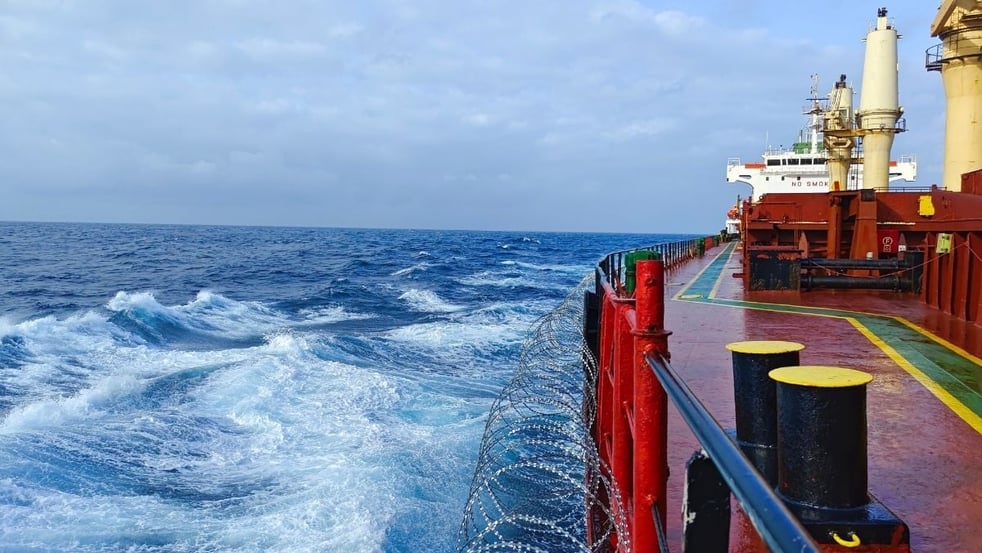
After several years of relative calm, piracy activity off Somalia has flared again since late October, with coordinated pirate action groups operating far offshore in the Somali Basin and adjacent Indian Ocean. The most serious event occurred on 6 November 2025, when the Malta flagged tanker HELLAS APHRODITE was fired upon and boarded approximately 560 nm southeast of Eyl. The crew followed contingency procedures and remained secured in the citadel. On the afternoon of 7 November, EU NAVFOR Operation ATALANTA forces, led by ESPS VICTORIA, executed a coordinated show of force; the pirates abandoned the tanker, and all 24 crew members were confirmed safe and uninjured. Authorities assessed the surrounding area’s threat level as critical and commenced an intensive search for the mothership dhow, believed to be supporting long range attacks. Subsequently, ATALANTA reported taking control of the dhow with support from regional partners, further disrupting the group’s operations.
Current threat picture
Industry analysis and official reporting indicate that pirates have retained the capability to operate 300–600 nm offshore, and under favourable conditions, up to ~800–1,000 nm.
This resurgence follows notable cases over 2023–2024 (including MV RUEN and MV ABDULLAH) and is occurring amid periods when regional naval assets are committed elsewhere (e.g., Red Sea tasking), creating windows of opportunity for long range operations. The International Maritime Bureau (IMB) has also highlighted a broader rise in incidents across 2025 and continues to stress the importance of crew safety and the need for consistent reporting.
What MISTO and BMP MS mean for voyage planning
The Maritime Industry Security Threat Overview (MISTO, 26 Nov 2025) provides a consolidated, factual description of prevailing maritime threats, including Somali pirates in the Northwest Indian Ocean, framed in terms of capability, intent, and opportunity. MISTO is designed to be read in conjunction with BMP Maritime Security (March 2025), which replaces earlier regional BMP guidance with a global threat and risk framework.
In practical terms, operators should ensure that voyage specific risk assessments explicitly consider the current Somali Basin threat picture, confirm the ship’s hardening and watchkeeping posture, and formalise UKMTO/MSCIO registration and daily reporting. BMP MS also provides structured guidance for incident response and post incident procedures, including evidence preservation that can be material to later claims defence.
AIS policy remains a company and flag state decision. U.S. MARAD currently advises U.S.-flagged vessels to turn off AIS in the Red Sea, Gulf of Aden and Somali Basin unless safety considerations dictate otherwise, while recommending AIS use in the Persian Gulf. Non-U.S. operators should follow flag state and company policy, balancing deconfliction needs with targeting risk.
Regardless of AIS or other security settings, vessels should ensure they have multiple reliable communication options and consistently report their position and status to the relevant authorities during high-risk transits.