


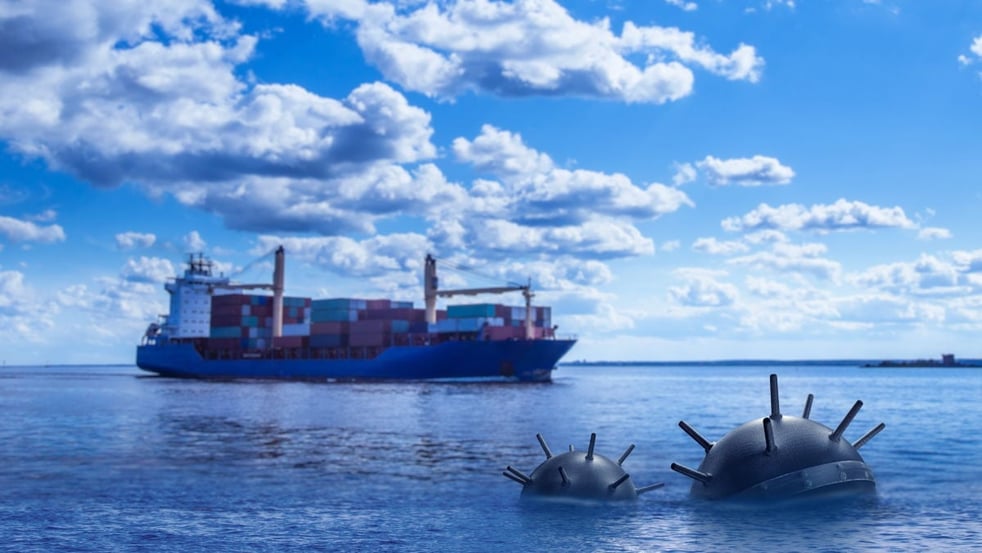
The security situation in the northern Black Sea continues to evolve rapidly, with merchant vessels now facing a diverse range of kinetic and operational threats. Informed by up-to-date incident reporting and expert assessments from Dr Dirk Siebels of Risk Intelligence, this article examines the most recent patterns of maritime activity linked to the Russia–Ukraine conflict and considers the resulting operational, navigational, and safety implications for shipping interests in the region.
The Russia-Ukraine war has reshaped the maritime security landscape across the Black Sea and beyond. Developments over the past 12 months have elevated operational risks for merchant ships, notably for those calling at ports in both Ukraine and Russia. Potential threats range from naval and aerial drone strikes to mine encounters and widespread GNSS interference.
Since late 2024, more than a dozen tankers engaged in the trade with crude oil or refined products from Russia have been attacked in the Black Sea, the Mediterranean and even at the Dakar anchorage off Senegal. Ukrainian officials have confirmed involvement in strikes against sanctioned tankers, including the VIRAT, KAIROS, and DASHAN in the Black Sea, and the QENDIL in the Mediterranean. In the Black Sea, the Russian port of Novorossiysk has been targeted by Ukraine, most recently in January this year, in a series of attacks.
Other attacks on non-sanctioned vessels since January 2025 remain officially unattributed, yet they are likely linked to Ukraine as well. All targeted ships had previously loaded cargoes in Russian ports. In most cases, explosives were attached to the hull with magnets, indicating the willingness to send a strong signal without causing significant structural damage to the ship or even injuries to the crew.
The expansion of Ukraine's long-range strike capabilities has also extended the threat zone for sanctioned tankers beyond the northern Black Sea. The December 2025 attack on the QENDIL, conducted using drones launched from a nearby vessel, demonstrated a significant escalation in both geographic reach and operational sophistication.
Meanwhile, Russian attacks with maritime implications are limited to the northern Black Sea. Russian forces are frequently targeting port facilities in Ukraine, particularly in the Odesa area. Berthed vessels have suffered collateral damage on several occasions. Several merchant ships have also been targeted directly en route to or from Ukraine in proximity to port approaches. However, these incidents have been much less frequent than direct attacks on ports.
Operational challenges extend beyond these direct kinetic threats. Persistent GNSS jamming and spoofing activities have created navigational hazards throughout the Black Sea, with vessels reporting false positioning data and erratic AIS displays. Sea mines – both anchored and drifting – also remain a concern, primarily in the north-western Black Sea. This was highlighted by the July 2025 mine strike that killed three crew members aboard the Ukrainian dredger INHULSKYI in the Bystrom River channel. Ukrainian ports continue to operate under ISPS Security Level 3 with frequent disruptions due to power outages and air-raid alerts, while Russian ports maintain Level 2 protocols.
The Russia-Ukraine war shows few signs of near-term resolution, and the maritime environment will likely continue to be affected for the foreseeable future.
P&I club perspective: Loss prevention and advisory considerations
From a P&I perspective, the northern Black Sea remains a high-risk operating environment, requiring shipowners, masters and operators to maintain clear situational awareness of both kinetic threats and the operational disruptions that accompany them. Although the tactical picture continues to evolve, recent incidents provide a consistent claims pattern: drone strikes on tankers at sea, damage to vessels alongside in Odesa and Chornomorsk, and fires resulting from debris impacts. These cases typically produce non-catastrophic but voyage-interrupting damage, with implications for hull, cargo, delay, crew injury, and pollution exposures.
Port calls in Ukraine (ISPS Level 3) and Russia (ISPS Level 2) continue to be affected by air raid alarms, power outages and sudden pauses in cargo operations. These interruptions can complicate laytime and performance obligations, making it important that crews are familiar with air-raid and rapid-disconnection procedures, particularly when handling petroleum, grain or other fire-sensitive cargoes. Accurate, contemporaneous documentation of delays and operational disruptions remains essential for protecting indemnity positions in any post-incident assessment.
While the Ukrainian Black Sea corridor remains operational under IMO Circular Letter 4748, its reliability from a P&I standpoint is qualified by the potential for abrupt changes in risk. Although it has generally functioned “without considerable issues,” periods of intensified Ukrainian or Russian strike activity may influence its practical safety and the extent of tacit acceptance by either party. Any such shift can affect contractual analysis around deviation, safe port warranties, port warranties, war risk provisions and off-hire. Masters should ensure that voyage instructions, chartering communications and logbook entries clearly reflect the prevailing threat environment, especially when choosing between corridor transit and alternative routing.
Navigational integrity is also a material concern, as widespread GNSS jamming and spoofing continue to affect vessel tracking, collision avoidance systems and the evidentiary strength of electronic records. Masters should corroborate positional data with radar, AIS and visual references, and maintain redundancy where possible. Log entries documenting interference may later prove important if navigational decisions come under scrutiny.
Crew welfare and legal exposure merit particular attention. Foreign crew may be subject to heightened scrutiny in certain Russian ports, and operators should ensure that masters have access to consular and legal contacts should questions or document checks arise. Any incident involving drone fragments, missile debris, or mine encounters, whether underway or alongside, should trigger immediate evidence preservation measures, including securing VDR, ECDIS, AIS and CCTV data and comprehensive photographic records, accompanied by prompt notification to the Club and hull underwriters.
Finally, operators should review their war risk coverage, trading restrictions and relevant charterparty clauses, including deviation, force majeure, safe port warranties and offhire provisions. Although military dynamics are fluid, P&I exposure remains concentrated on collateral damage, operational interruption and navigational interference, rather than total loss scenarios. Seasonal conditions add further variability: winter weather constrains naval-drone activity but has less impact on aerial systems, while Russia’s winter-focused strikes on power and heating infrastructure contribute to episodic port disruptions. These contextual factors shape not only risk levels but also how causation, delay and operational reasonableness are assessed following an incident.